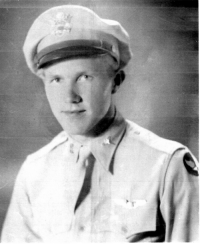
 Henry was born in Florida, New York on February 23, 1923 as a first generation citizen and died at age 99 on September 10, 2022 in Austin, TX.
He was raised in Pine Island, New York, a Polish and German farming community, as number five in the family of 4 girls and 5 boys. The family was self sufficient, raising animals and food crops to survive the depression. While in high school Henry ran track, joined Scouts, played trumpet in the band and formed a polka band playing gigs at local dances. After graduation in 1942, Henry attended Quaddy Institute in Maine to learn about aircraft engines.
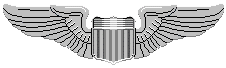
On April 14, 1943, Henry volunteered and was accepted as an Aviation Cadet in the Army Air Corps where he qualified to become a pilot-first flying B-24; then in 1945 flying 21 bombing missions over Japan in B-29s during WWII. The firebombing of those thousands of Japanese civilians changed Henry’s feelings about war.
Henry was stationed in Puerto Rico when he was called on to pilot C-54s during the Berlin Airlift where he flew 130 missions in extreme conditions from many allied air bases in Europe landing in West Berlin. When Russia closed all land avenues to West Berlin in 1948, only planes could fly in supplies to keep the German peope fed and warm during the blockade. In January 1949 Henry returned to Puerto Rico to find he had been transferred to Howard AFB then Albrook AFB in Panama. While there he met a Texas girl who was visiting relatives, and they were married in the chapel at Biggs AFB, El Paso, TX in the fall of 1949. Married over 72 years, Henry's death intervened. His widow and all five children were present for his funeral mass in St Louis Catholic Church and military funeral at an Austin, TX Cemetery.
After learning to fly air-sea-snow planes at McDill AFB, FL in 1949, Henry was transferred to Japan/Korea in Air Rescue Service during the Korean War tor two years. The SA-16 he flew was unarmed, so he was given a pistol to protect himself while flying behind enemy lines to rescue downed American pilots and other rescue operations on land and sea. Upon returning stateside, Henry continued Air Rescue missions for about five years at Lowry AFB in Denver CO until being transferred to Ciampino Airport Flt Service in Rome, Italy in late 1956. Stateside to Chanute AFB in 1959 for Aircraft Maintenance School, then to K. I. Sawyer AFB in the Upper Peninsula of MI in late 1959 where he separated from the Air Force in 1963 retiring three months later as a Major and Command Pilot to Austin TX.
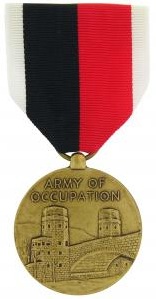
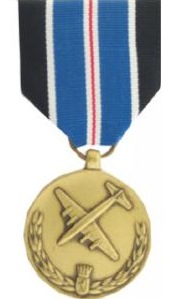
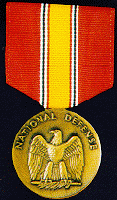
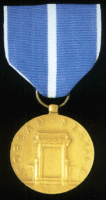
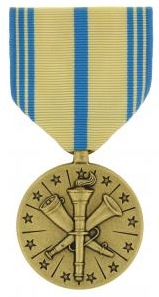
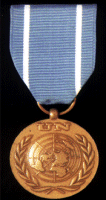
Henry was a much decorated pilot, flew many different airplanes and coached others on flying tactics as an Instructor. He found a second career with the Internal Revenue Service, but retired after eight years due to disability. A talented handyman and born farmer, Henry grew vegetables everywhere he lived and loved caring for trees and flowers. He was very thrifty, scrupulously honest, calmly handled emergencies, read for information only and described himself as "aloof, stoic and taciturn".
He was happiest when in school learning something new. Concerned with the state of the world, he read editorials and watched all news programs.
He died as an independent thinker and conservative pacifist. He had a strong faith, and believed that God helped those who helped themselves.


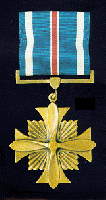
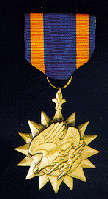
![br_oak2.jpg [Bronze Oak Leaf Cluster]](../../../images/devices/bolc.jpg)
![star1.gif [Bronze Star]](../../../images/devices/b_star.jpg)
![arpuc.jpg [The Presidental Unit Citation]](../../../images/medals/arpuc.jpg)
![amcamp.gif [The American Campaign Medal]](../../../images/medals/amcamp.gif)
![apcm.jpg [The Asiatic-Pacfic Campaign Medal]](../../../images/medals/apcm.jpg)
![wwiivic.gif [The Victory Medal, World War II]](../../../images/medals/wwiivic.gif)